Is It Okay to Eat the Same Thing Every Day for Weight Loss?
Why variety matters for weight loss, and how to add more without changing how you eat.
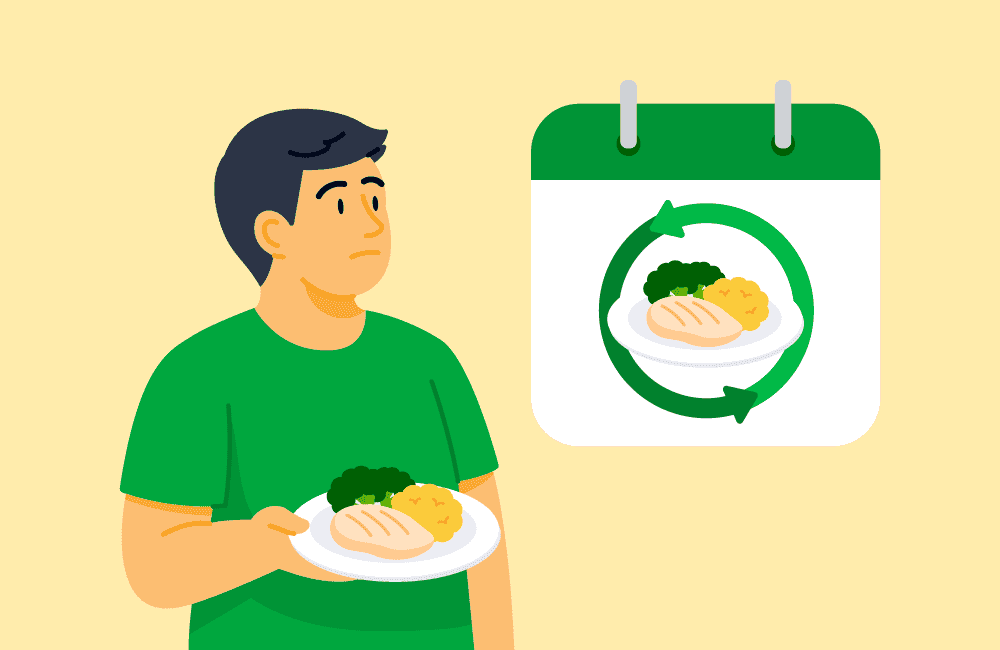
When you find meals that help you stay in a calorie deficit, it’s common to rely on them day after day. This way of eating can make weight loss feel more manageable, but is eating the same thing every day actually helping, or could it be holding you back?
Let’s explore why variety matters for weight loss and some simple changes you can make to increase variety in your diet.
Why Variety Is Important
Eating the same meals on repeat can be helpful for weight loss. It simplifies decisions about what to eat, makes food tracking and meal prepping easier, and can also make it easier to stay in a calorie deficit. However, over time, a diet that lacks variety can work against both your weight loss progress and your health. Here’s why you need variety in your diet:
Variety helps cover your nutrient needs
No matter how healthy your food or meals are, there’s no single food, or group of foods, that has every nutrient your body needs. If you’re eating the same three meals each day, you increase the risk of missing key micronutrients (vitamins and minerals), even if you’re hitting your calorie and macronutrient targets perfectly. Eating a variety of different foods means that instead of getting the same small set of vitamins every day, you are constantly exposed to a variety of nutrients that support your energy and your metabolism.
Variety supports a healthier gut
Your gut is home to thousands of different bacterial species, many of which play an important role in digestion and appetite regulation. To support this ecosystem, your gut relies on a wide range of fibre from different foods, especially plant foods. When the same foods are eaten on repeat, fewer types of bacteria are supported. A more varied diet provides different types of fiber that help maintain gut diversity, which is linked to better digestion and long-term weight management.
A major study of over 1,600 twins tracked for nearly a decade found that individuals with lower gut microbiome diversity were more likely to experience long-term weight gain. By studying twins, researchers showed that this pattern was only partly explained by genetics, suggesting the gut microbiome may play a role in how the body manages energy over time. With more than 60% of gut microbiome diversity shaped by environmental factors rather than genes, food choices, especially fibre intake, remain a science-backed way to support weight loss and metabolic health (1).
Variety makes weight loss easier to stick with
Eating the same foods every day can feel manageable at first, especially when they help you stay within your calories. But over time, it often starts to feel repetitive or restrictive, which makes it harder to keep going. When food feels boring or limiting, it’s easier to lose motivation. Adding variety helps meals feel more enjoyable, making weight loss something you can maintain, not just push through for a few weeks.
How to Increase Variety in Your Diet
If you tend to eat similar meals most days and enjoy eating this way, you don’t need to overhaul your diet to add more variety. It can be as simple as changing one element of your meal to bring in some variety. Here are our three top tips for adding more variety to your diet.
1. Rotate your protein source
When people hear “variety,” they often think it means cooking completely different meals. In practice, you can get most of the benefit by keeping the same meal structure and rotating the protein instead. For example, the same salad, stir-fry, or curry can be made with chicken one day, fish or eggs another, and beans, lentils, or tofu later in the week. This adds variety without changing how you plan your meals or making things feel more complicated.
2. Change the type or color of vegetables
Most people have a couple of vegetables they default to because they’re easy and familiar. There’s nothing wrong with that, but different vegetables offer different benefits. Eating the same ones all the time means you might miss out on nutrients you’d get from others. Aim to swap around the vegetables you use in your meals.
3. Alternate your carbohydrate base
Switching between grains or other carbohydrate sources helps diversify fiber intake and micronutrients. Rotating options across the week keeps meals familiar while broadening the nutritional benefits. For example, if you usually add vegetables to a stir-fry, rotate which ones go in. If you regularly add vegetables to a pasta or curry, change the mix you use rather than the meal itself. Keeping the dish the same and rotating the vegetables across the week is often the easiest way to add variety and different typed of fiber, without extra meal planning.
Key Takeaways
- Eating the same foods every day can make weight loss easier at first, but too little variety can work against your health and long-term progress.
- No single food or meal provides everything your body needs, variety helps cover gaps in vitamins, minerals, and fibre.
- A more varied diet supports gut diversity, which is linked to better digestion, appetite regulation, and long-term weight management.
- You don’t need to change your entire diet to add variety, small swaps within familiar meals are enough. Rotating proteins, vegetables, and carbohydrate sources across the week adds nutritional benefits without extra planning or complexity.
References
- Gut microbiome diversity and high-fibre intake are related to lower long-term weight gain (2017). doi: 10.1038/ijo.2017.66
Related Articles
You Might Also Like
Curated content to explore this topic further