How Much of a Calorie Deficit Is Too Much?
Eating less isn’t always better for weight loss. Here’s why eating below your calorie target won’t lead to better results.
Why Eating Too Little Can Make Weight Loss Harder
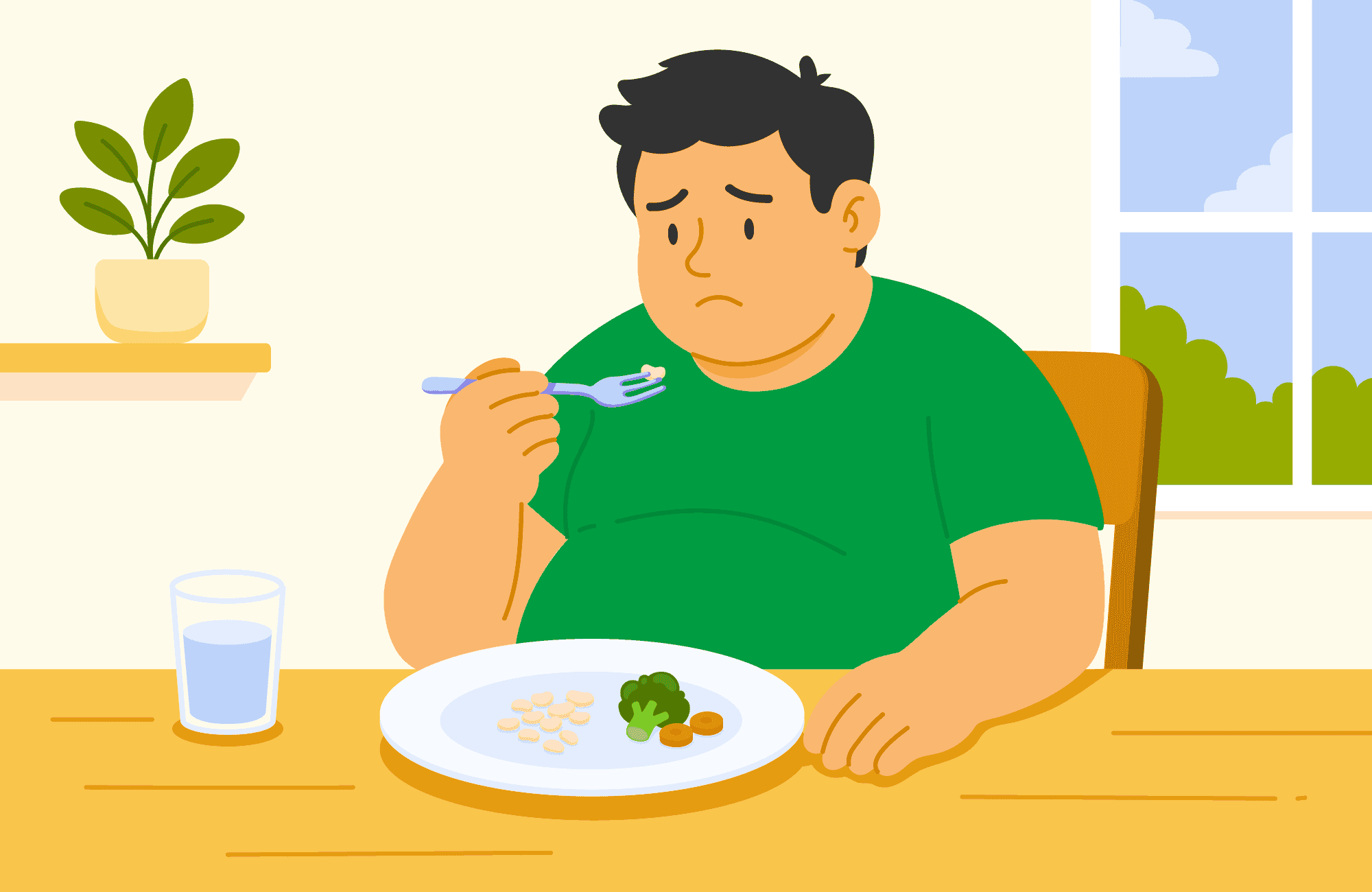
When trying to lose weight, it's common to think that the fewer calories you eat, the faster you'll reach your goal. While being in a calorie deficit is essential for weight loss, making that deficit too large can actually make weight loss more challenging.
So, how do you know when your calorie deficit has gone too far? Here's why eating too little can make weight loss harder and the signs that it may be time to reassess your calorie target.
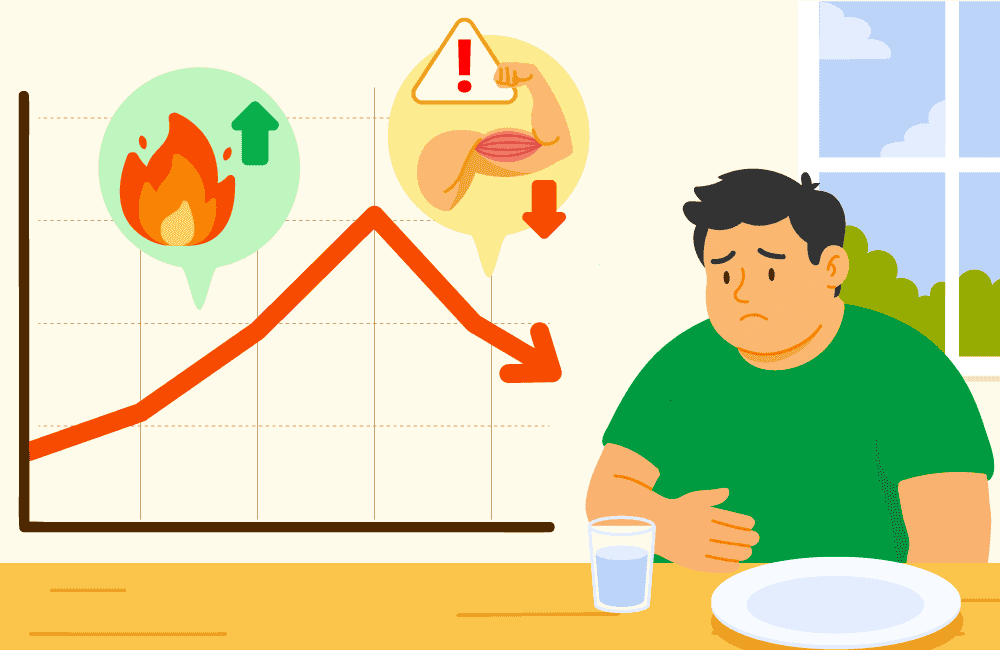
How Eating Too Little Can Slow Your Progress
Very low calorie diets can produce rapid weight loss in the short term. So, if a bigger calorie deficit can make you lose weight faster, why don't dietitians recommend eating as little as possible?
You may lose muscle as well as fat
When you lose weight, the goal is generally to lose body fat while preserving as much muscle as possible. But when your calorie intake is extremely low, you’re more likely to lose lean mass alongside fat.
This matters for more than just strength. Muscle is metabolically active tissue, which means your body uses energy to maintain it even at rest. As you lose muscle, your resting energy expenditure can decrease, meaning your body needs fewer calories each day. Some reduction in energy needs is expected whenever you lose weight, simply because you have a smaller body to maintain, but losing more muscle can contribute to this decline and make continued weight loss and long-term weight maintenance more challenging.
Eating enough protein can help protect muscle during weight loss, particularly when combined with resistance training and adequate protein. However, it’s important to note that protein can't necessarily compensate for an extremely large calorie deficit.
In one study, adults with overweight or obesity followed a very-low-calorie diet for eight weeks. One group consumed 600 calories and 52g of protein per day, while the other consumed 700 calories and 77g of protein per day. Despite protein making up 35-40% of their total calorie intake, both groups lost around 6% of their lean mass, experienced a 9-10% reduction in resting metabolic rate and around 27% of the weight they lost came from lean mass (1).
This highlights why simply eating more protein isn't always enough to protect muscle if your overall calorie intake is extremely low. A more moderate calorie deficit, alongside adequate protein and resistance training, can help you lose weight while preserving more of the muscle you want to keep.
Your plan becomes harder to stick with
A larger calorie deficit might seem like it should lead to faster weight loss, but only if you can actually maintain it. The more restrictive your diet becomes, the harder that can be to follow.
Eating significantly less than your body needs can leave you feeling hungry, thinking about food more often and experiencing stronger cravings. Weight loss itself can also trigger changes in the hormones and systems that regulate appetite, increasing your drive to eat.
This can make it much harder to consistently stick to the calorie target you originally set. You might find yourself regularly eating more than planned, having periods where you stop tracking altogether or repeatedly switching between eating very little and eating much more.
This is why the biggest calorie deficit isn't necessarily the most effective one. A more moderate deficit that allows you to eat satisfying meals and feels realistic to maintain can make it easier to stay consistent for long enough to make long-term and sustainable progress.

There's less room to meet your nutrition targets
When you eat fewer calories, you have less food available to provide all the nutrients your body still needs. Your requirements for protein, fiber, vitamins and minerals don't necessarily decrease just because you're trying to lose weight, so the lower your calorie intake becomes, the more carefully those calories need to be used.
For example, you still need enough protein to help preserve muscle, fiber to support digestive health and a wide range of vitamins and minerals to keep your body functioning properly. If you're eating very little, it can become difficult to fit enough nutrient-rich foods into your day while meeting all of these needs.
This doesn't mean reducing calories automatically leads to nutrient deficiencies. The quality of your diet matters too. But an extremely low calorie intake leaves much less room for error, particularly if you're also cutting out food groups or eating a limited variety of foods. This is one reason why very low calorie diets should only be followed with appropriate medical supervision.
Signs Your Calorie Deficit May Be Too Large
There isn't one symptom that can tell you for certain that you're not eating enough. However, if your calorie intake is very low, you may start to notice changes in how you feel, think and function throughout the day.
A 2025 systematic review looking at very-low-calorie diets (2) found that while these diets can produce significant weight loss, they can also have negative effects including:
- Feeling constantly hungry
Some increase in hunger is normal when you're eating fewer calories, but persistent or intense hunger can be a sign that your current approach is difficult for your body to sustain. Severe food restriction can increase your preoccupation with food, making it harder to concentrate on other things. - Feeling unusually tired or weak
Consistently eating too little can leave you with less energy for exercise as well as everyday activities. If you're struggling to exercise at your usual intensity or finding yourself moving less throughout the day because you're tired, your calorie deficit may be working against some of the behaviors that support weight loss. - Feeling cold more often
Increased sensitivity to cold has been observed during substantial energy restriction as the body adapts to having less energy available. - Feeling irritable or finding it difficult to concentrate
Severe restriction has also been associated with changes in mood, motivation and concentration.
If any of these symptoms are occurring after you have significantly reduced your calorie intake, we recommend speaking with a healthcare professional for advice and reassessing your calorie target.
How to Stay Full in a Calorie Deficit
Creating a calorie deficit doesn't have to mean tiny portions, skipping meals or going to bed hungry. With a few smart changes, you can still eat satisfying meals and enjoy the foods you love while reducing your overall calorie intake. Here's how.
1. Be strategic about where you cut calories
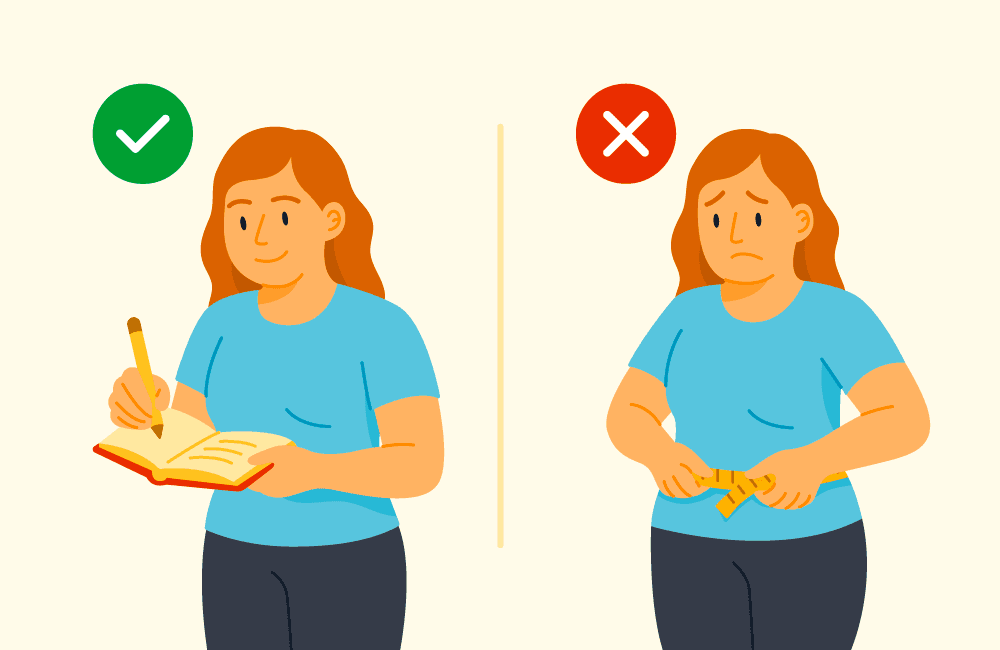
Eating fewer calories doesn't necessarily mean eating a lot less food. We recommend, before making changes to the way you eat, to spend a few days tracking your usual intake. Then take a look at your Diary and ask yourself: Which calories am I actually getting something out of?
You might really enjoy dessert after dinner, but barely notice the oil you cook with. Or perhaps you'd rather keep your afternoon snack and swap your regular soft drink for a lower-calorie option.
The easiest calorie deficit is often created by cutting back on the calories you won't miss very much, rather than automatically making every meal smaller or removing the foods you look forward to.
2. Build meals that actually satisfy you
If you've ever finished lunch only to feel hungry again an hour later, take a look at what was on your plate.
Before automatically making your meals smaller to save calories, think about whether they'll actually keep you satisfied. Protein-rich foods such as eggs, fish, lean meat, yoghurt, tofu and legumes can help with fullness, while fiber-rich foods such as vegetables, fruit, wholegrains and legumes add bulk and help meals feel more substantial.
When you're eating fewer calories overall, making those calories work harder to keep you satisfied can make your Calorie Target much easier to stick to.
3. Eat more food, not more calories
This might sound backwards, but one of the best ways to feel less hungry while losing weight is to increase the volume of your meals.
Vegetables, salads, fruit, soups and legumes contain a lot of water and fiber, so they take up plenty of room in your stomach without adding many calories. Compare that with foods like chocolate, chips or nuts, which pack a lot of calories into just a few bites.
Instead of focusing only on eating less, think about how you can make your plate look bigger with lower-calorie, high-volume foods. You'll often feel just as satisfied while still creating the calorie deficit needed for weight loss.
Your Calorie Target Isn’t a Number to Beat
When it comes to weight loss, a bigger calorie deficit isn't always better. A more moderate deficit may mean losing weight a little more gradually, but it gives you more room to eat enough food, meet your nutritional needs, preserve muscle and follow an approach you can realistically maintain.
That's why your goal shouldn't be to finish each day as far below your Calorie Target as possible. Instead, aim to eat around your target while building meals that keep you satisfied and provide the nutrition your body needs.
When you create a fatsecret account, you are given a Calorie Target that already takes your weight loss goal into account, which means the calorie deficit needed for weight loss is built into the number you see. You don't need to create an even larger deficit by deliberately eating well below it.
If you're consistently eating around your Calorie Target but aren't seeing the progress you'd expect, eating even less isn't necessarily the best next step. Check that the information used to calculate your target is still accurate, particularly your current weight and activity level. It's also worth checking that your food logging reflects what you're actually eating, including portions, cooking oils, drinks, sauces and other extras that can be easy to overlook.
Think of your Calorie Target as a guide for how much you can eat while still working towards weight loss, rather than a maximum you should try to stay well below.
References
- A protein-supplemented very-low-calorie diet does not mitigate reductions in lean mass and resting metabolic rate in subjects with overweight or obesity: A randomized controlled trial (2021). doi: 10.1016/j.clnu.2021.10.006
- Very low calorie diets affect long term weight loss and health outcomes: A systematic review (2025). doi: 10.20473/ijph.v20i1.2025.187-199
Related Articles
You Might Also Like
Curated content to explore this topic further