Plant-Based Protein vs. Animal-Based Protein: Which Is Best for Weight Loss?
Discover how plant and animal proteins compare for building muscle, maintaining strength and supporting weight loss.
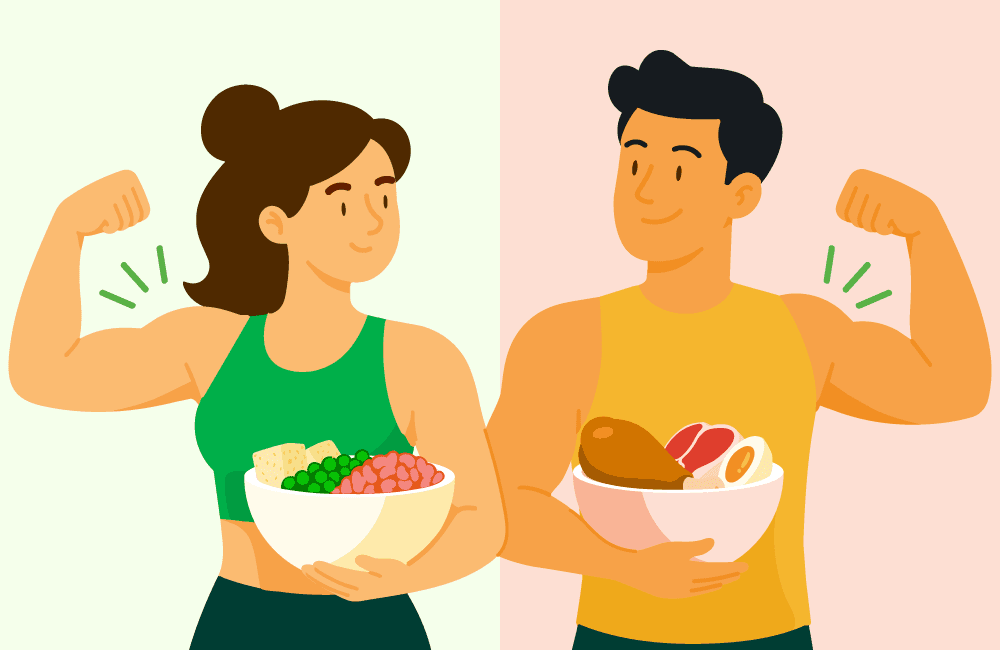
Can Plant-Based Protein Support Muscle Growth as Effectively as Animal-Based Protein?
Protein is essential for building and maintaining muscle, whether you’re trying to get stronger, maintain muscle as you age or preserve lean mass while losing weight. But does the type of protein you eat matter for muscle growth?
Animal proteins such as meat, eggs and dairy are often considered better for building muscle because they generally provide all nine essential amino acids in sufficient amounts and are easily digested by the body. But if you eat a vegetarian or vegan diet, or simply want to eat more plant foods, you might be wondering whether plant-based protein can be just as effective.
The good news is that both plant and animal proteins can support muscle mass and strength, but there are some important differences worth understanding.
Plant Protein vs Animal Protein: What's the Difference?
All dietary protein is made up of amino acids. Your body uses these amino acids for many important functions, including building and repairing muscle tissue.
Nine amino acids are considered "essential", which means your body can't make them itself and needs to get them from food. Most animal proteins, including meat, fish, eggs and dairy, contain all nine essential amino acids in sufficient amounts.
Plant-based protein sources vary more in their amino acid profiles. Very few sources provide all nine essential amino acids in sufficient amounts. However, this can be overcome through protein combining, where different plant protein sources are eaten together to provide a more complete mix of essential amino acids.
For example, legumes tend to be lower in methionine but higher in lysine, while grains tend to be lower in lysine and higher in methionine. Combining foods such as rice and beans or lentils and grains means the amino acids in one food help complement those in the other.
Eating a variety of plant protein sources across the day can help ensure you get all the essential amino acids your body needs.
Is Animal Protein Better for Building Muscle?
Research suggests animal protein may have a small advantage when it comes to increasing lean body mass, but the difference isn't as large as you might expect.
A 2021 systematic review and meta-analysis looked at 18 randomised controlled trials comparing animal and plant proteins in generally healthy younger and older adults (1).
Protein sources included whey, casein, milk, dairy and meat, as well as plant proteins such as soy, pea and rice.
The researchers found that animal protein had a small advantage for increasing lean body mass, particularly among younger adults. However, when it came to muscle strength, there was no meaningful difference between animal and plant protein.
How Much Does Protein Source Really Matter?
When you’re losing weight, maintaining muscle is just as important as losing body fat. While the type of protein you eat can play a role, there are a few other factors to consider when it comes to supporting muscle.
Getting enough protein overall
Focus on meeting your daily protein targets first. The amount of protein you eat matters far more than the protein source. Your body needs sufficient protein to get maximum benefits. Including a protein source in every meal and snack is the simplest way to meet your daily needs.
Resistance training
Protein gives your body the building blocks it needs to maintain and repair muscle, but resistance training provides the stimulus for your muscles to adapt and grow.
This can include lifting free weights, using weight machines or resistance bands or performing bodyweight exercises such as squats and push-ups.
In the systematic review, resistance training appeared to have a greater influence on muscle development than whether participants consumed animal or plant protein.
Eating a variety of protein foods
Rather than relying on the same protein source at every meal, aim to include a mix of protein-rich foods throughout your day.
If you eat both plant and animal foods, that might mean yoghurt or eggs at breakfast, beans or lentils at lunch and fish, chicken or tofu at dinner. This naturally gives you a broader mix of amino acids, as well as different vitamins and minerals.
If you eat a vegetarian or vegan diet, variety becomes particularly useful. Rotate between foods such as tofu, tempeh, beans, lentils, chickpeas, nuts, seeds and whole grains and look for easy opportunities to combine complementary proteins.
Key Takeaways
1. Both plant and animal protein can support muscle
Animal protein may have a small advantage for increasing lean body mass, but research found no meaningful difference between plant and animal protein when it came to muscle strength.
2. Plant proteins can complement each other
Many plant proteins are lower in one or more essential amino acids, but combining different sources can help provide a more complete amino acid profile.
3. Look beyond the type of protein you eat
When it comes to maintaining muscle, particularly during weight loss, protein source is only one consideration. Getting enough protein overall, eating a variety of protein-rich foods and including resistance training are also important.
References
- Animal Protein versus Plant Protein in Supporting Lean Mass and Muscle Strength: A Systematic Review and Meta-Analysis of Randomized Controlled Trials (2021). doi: 10.3390/nu13020661
Related Articles
You Might Also Like
Curated content to explore this topic further