Are Nuts a Good Weight Loss Snack?
Are nuts good for weight loss despite being high in calories? Learn which nuts to choose, how much to eat and how nuts and peanut butter can fit into your weight-loss plan.
Are Nuts a Good Weight Loss Snack?
Nuts can be confusing when you’re trying to lose weight. They’re packed with nutrients and often recommended as a healthy snack, but a small handful can also contain a surprisingly high number of calories.
So, are nuts actually good for weight loss?
The short answer is yes! Nuts can absolutely be part of a healthy weight-loss diet. The key is paying attention to portion size and making those calories work within your overall calorie target.
If Nuts Are So High in Calories, Why Are They Recommended for Weight Loss?
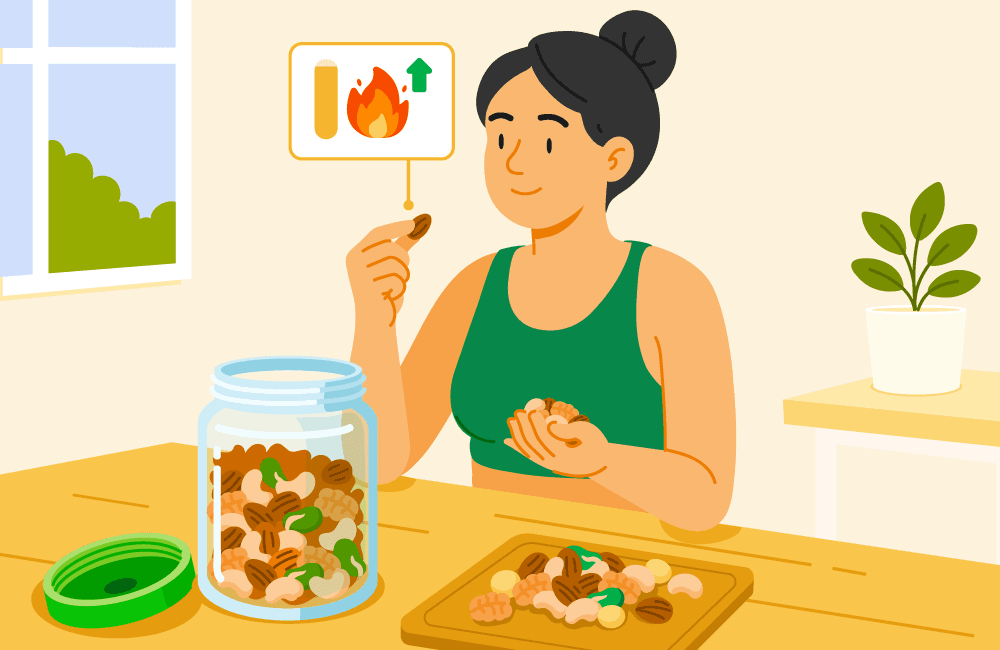
Nuts are calorie dense, meaning they provide a relatively large number of calories in a small amount of food. Most of these calories come from fat, which provides more than twice as many calories per gram as protein or carbohydrate.
That doesn’t mean nuts need to be avoided when you’re trying to lose weight.
Nuts provide a range of important nutrients, including plant-based protein, fibre, unsaturated fats, vitamins and minerals. Their combination of fat, protein and fibre can also make them a satisfying snack.
Research looking at nut consumption and body weight has found that including nuts in the diet does not lead to the amount of weight gain we might expect based purely on their calorie content.
There are a few possible reasons for this. Nuts may help reduce hunger or lead people to naturally compensate by eating less later in the day. We also don't necessarily absorb every calorie contained in whole nuts because some of their fat remains trapped within the nut's cell structure and passes through the digestive system.
For weight loss, though, your overall calorie intake still matters. Nuts can fit into a calorie deficit, but their high calorie density makes portion size particularly important.
How Many Nuts Should You Eat a Day for Weight Loss?
There isn’t one perfect number of nuts you should eat each day to lose weight. A useful starting point is a small handful, around 30 g — but the right amount depends on your individual calorie needs and what else you eat throughout the day.
The biggest issue with nuts isn't that they're "bad" for weight loss. It's that they're incredibly easy to eat more of than you realise.
Think about the last time you ate nuts straight from the packet. You grab a handful, go back for another few, and maybe have another handful without giving it much thought. Because nuts are so calorie dense, those handfuls can add up quickly.
This is where tracking can be useful.
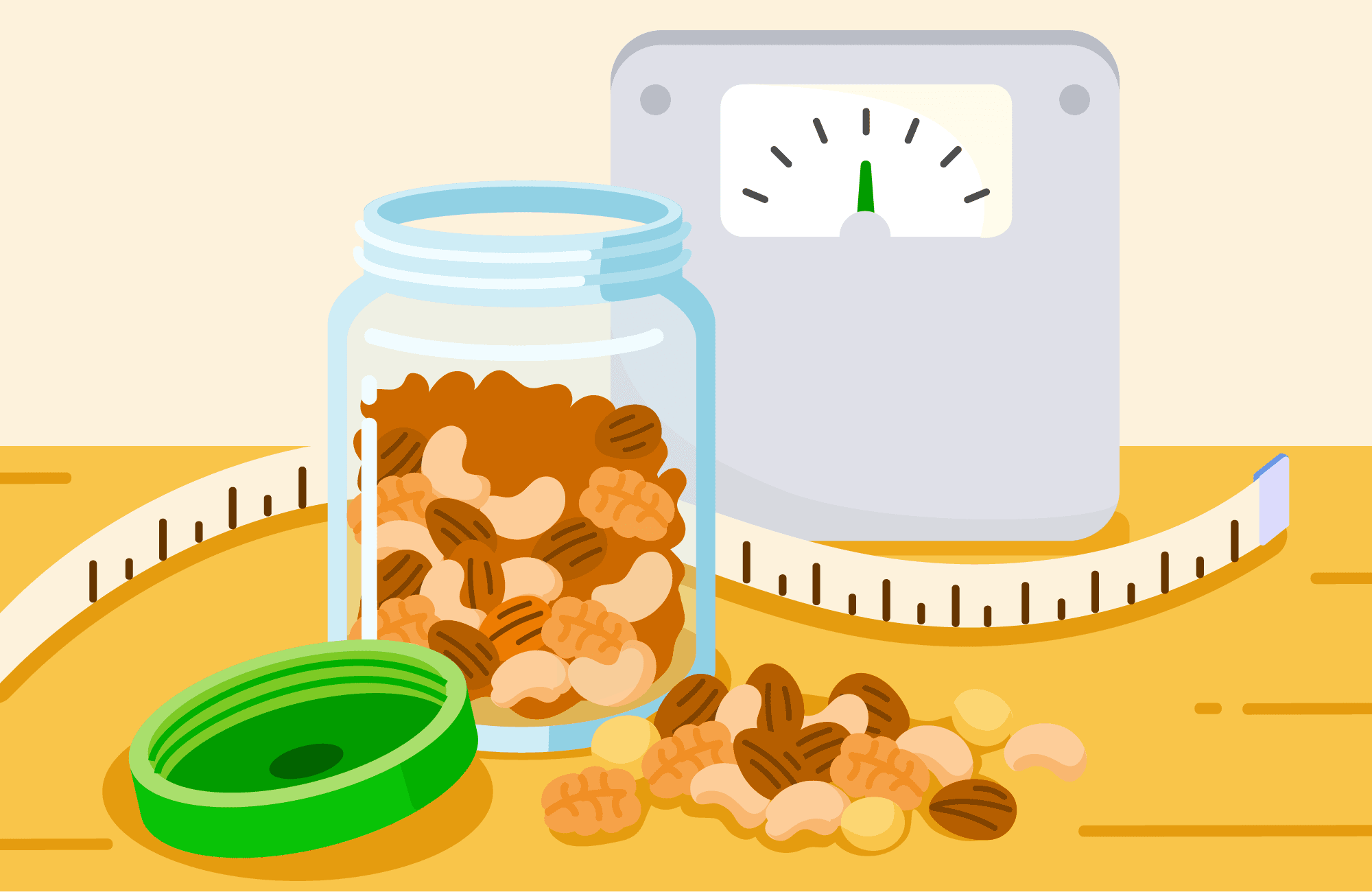
If you regularly eat nuts straight from the packet, try weighing your usual handful once and logging it in the FatSecret app. You might be surprised by how many calories your usual portion contains, and how different it is from the serving size listed on the packet.
You don't need to weigh your nuts forever. Doing it a few times can simply help you learn what a healthy portion looks like.
Which Nuts Are Best for Weight Loss?
Almonds, pistachios, cashews, walnuts, pecans and other nuts all have slightly different nutrition profiles, but they all offer a range of health benefits. Rather than worrying about which nut is “best” for weight loss, choose nuts you enjoy and focus on portion size and what has been added to them.
Be Mindful of Salted Nuts
Salt itself doesn't add calories, so salted nuts aren't necessarily higher in calories than unsalted nuts.
However, salty foods can be very easy to keep reaching for. If you find that you can comfortably stop after a small portion of plain almonds but somehow reach the bottom of a packet of salted nuts without noticing, that's worth considering.
Choosing unsalted nuts or portioning salted nuts into a bowl rather than eating them directly from the packet can make portions easier to manage.
Watch Flavoured and Coated Nuts
Honey-roasted, chocolate-coated, caramelised and other flavoured nuts can contain added sugar, oils or coatings that increase their calorie content.
That doesn't mean they're completely off limits. But if weight loss is your goal, check the nutrition information and serving size and consider logging your portion before you start eating.
What About Peanut Butter?
We can’t talk about nuts without mentioning peanut butter! It’s delicious, satisfying and can make a great addition to smoothies, yoghurt bowls and snacks. Interestingly, peanuts are technically legumes rather than tree nuts, but nutritionally they share many of the same characteristics.
Peanut butter can absolutely fit into a weight-loss diet, but just like whole nuts, it’s calorie dense and easy to underestimate.
When choosing peanut butter, check the ingredients list and look for one made primarily from peanuts, without added sugar or oils.
For a lower-calorie option, you could also try powdered peanut butter. Much of the fat is removed while the protein is retained, so when mixed with a little water, it gives you a similar peanut flavour and consistency for fewer calories.
Just keep an eye on your portion. A spoonful can quickly become two or three, especially when you’re spreading it onto toast or adding it to oats or smoothies. Try measuring your usual serving once and logging it in FatSecret, it’s an easy way to see how your peanut butter fits into your day.
Are Nuts Good for Weight Loss? The Bottom Line
Nuts are a good example of why judging a food by calories alone doesn't tell you the whole story.
Yes, they're calorie dense, but they're also nutrient dense, providing protein, fibre, healthy fats and a variety of vitamins and minerals. Research suggests that nuts can be included in a weight-loss diet when overall calorie intake is managed.
You don't need to avoid them to lose weight. Instead, focus on how much you're eating, particularly if you tend to snack straight from the packet.
Next time you have nuts, try weighing your usual portion and logging it in the FatSecret app. Seeing how it fits into your day can help you find a portion that works for both your calorie target and your appetite.
Related Articles
You Might Also Like
Curated content to explore this topic further